
Industry Knowledge
Glass vs. Plastic Lenses in LED Street Lights: What Should You Consider?
Compare glass and plastic lenses for LED street lights. Learn about light transmittance, heat resistance, durability and optical performance.
When choosing an LED street light, buyers usually focus on power, efficiency, IP rating and driver brand. The optical lens is often overlooked.
However, the lens is an important part of the lighting system. It controls how light from the LEDs is distributed onto the road and can also affect long-term optical performance.
For outdoor lighting projects, the choice between a plastic lens and a glass lens is worth considering. Temperature, sunlight, dust, moisture and other environmental conditions can all affect the performance of a lighting fixture over time.
So, what should you look at when comparing a glass lens LED street light with a conventional plastic lens design?
Why Does the Lens Matter in an LED Street Light?
The lens controls the direction and distribution of light from the LED source.
A well-designed optical system should provide the required light distribution while maintaining good light transmittance and consistent performance.
Outdoor street lights also need to operate for long periods in changing weather conditions. They may be exposed to direct sunlight, rain, dust, high temperatures and, in some areas, salt or corrosive substances.
For this reason, the lens is more than just an optical component. Its material and design can also affect the durability and maintenance requirements of the fixture.
Plastic Lenses in Outdoor LED Lighting
Plastic lenses are widely used in LED lighting. They are lightweight and can be molded into different optical shapes, making them suitable for many lighting applications.
Depending on the material and product design, plastic lenses can provide good optical performance.
However, long-term outdoor use can create additional requirements. Exposure to sunlight, heat and other environmental factors may affect some plastic materials over time. Scratches, surface aging and changes in appearance can also become considerations during the service life of an outdoor lighting fixture.
This does not mean that every plastic lens has the same performance. Different materials and manufacturing processes can produce very different results.
For demanding outdoor applications, buyers may therefore also consider glass optical lenses when evaluating long-term durability and optical stability.
What Is a Glass Lens LED Street Light?
A glass lens LED street light uses a glass optical lens to control and distribute light from the LED source.
Glass has several characteristics that can be useful in outdoor lighting applications. It offers high light transmittance and strong resistance to heat, scratches and corrosion.
For road and municipal lighting projects where fixtures are expected to operate outdoors for many years, these characteristics can be important factors when selecting a suitable lens design.
Glass vs. Plastic Lenses: Key Differences
There is no single lens material that is suitable for every lighting application. The right choice depends on the product design, environment and project requirements.
Here are several factors worth comparing.
Light Transmittance
Light transmittance affects how much light passes through the optical lens.
A matrix glass lens can provide light transmittance of up to 95%, helping maintain efficient optical performance.
However, lens material is only one factor affecting the final lighting result. LED efficiency, optical design, lens geometry and light distribution also need to be considered.
When comparing different products, it is better to check the complete photometric data rather than looking at the lens material alone.
Heat Resistance
Outdoor lighting fixtures can experience significant temperature changes during operation.
Glass has strong resistance to high temperatures. The matrix glass lens used in this type of street light is designed to withstand temperatures from -50°C to +550°C, according to its specified material performance.
This characteristic can be useful for outdoor lighting applications exposed to high temperatures or direct sunlight.
Resistance to Yellowing and Aging
Long-term exposure to sunlight is another factor to consider when selecting an outdoor lighting lens.
Depending on the material and environmental conditions, some plastic materials can experience changes in appearance or optical properties as they age.
Glass does not yellow in the same way as conventional plastic materials. A glass lens can therefore help maintain a stable appearance and optical performance over long-term outdoor use.
Scratch and Corrosion Resistance
Street lights are exposed to dust, rain and other environmental conditions throughout their service life.
The matrix glass lens provides resistance to scratches and corrosion, as well as salt and alkali resistance.
This can be particularly useful for outdoor lighting projects in coastal areas, industrial environments and other locations where the lighting fixture may be exposed to demanding conditions.
Cleaning and Maintenance
Dust and dirt can accumulate on outdoor lighting fixtures over time.
The smooth glass surface is easy to clean and is less prone to electrostatic dust accumulation.
For large-scale road and municipal lighting projects, simple cleaning and maintenance can be useful when managing a large number of installed fixtures.
What Is a Matrix Glass Lens?
A matrix glass lens is an integrated glass optical design developed to control the distribution of LED light.
The optical structure works together with the LED source to direct light toward the required area.
For street lighting, different optical distributions can be selected according to the road layout and installation conditions.
For example, this street light supports T2, T3 and T4 light distribution options for different outdoor lighting requirements.
The appropriate distribution depends on factors such as road width, pole spacing, mounting height and fixture arrangement.
A good optical design should provide suitable road coverage while reducing unnecessary light outside the target area.
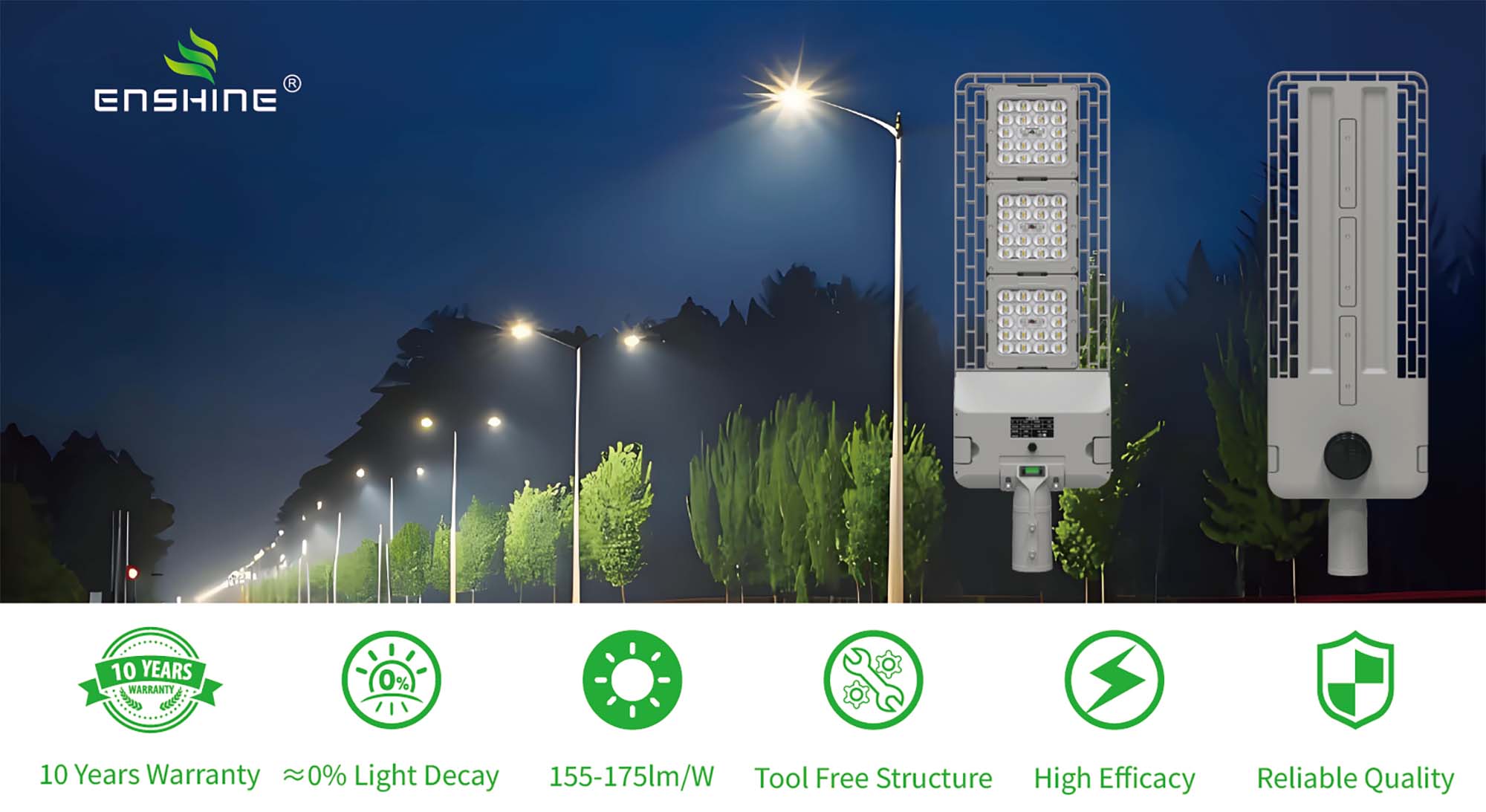
When Should You Consider a Glass Lens for Street Lighting?
A glass lens may be worth considering when a project places greater emphasis on long-term outdoor durability and optical stability.
Typical applications include:
Urban road lighting
Highway lighting
Municipal lighting projects
Industrial parks
Parking lots
Public squares
School campuses
Hospital surroundings
Residential roads
For projects in hot, humid, coastal or industrial environments, resistance to heat, corrosion, scratches and surface aging can be particularly important.
The lens should still be evaluated together with the complete fixture design, LED components, driver, housing and protection rating.
Matrix Glass Lens for Municipal and Outdoor Lighting Projects
Large outdoor lighting projects often have requirements beyond basic illumination.
Project buyers may need to consider durability, optical performance, maintenance, surge protection and lighting control.
A matrix glass lens can be combined with other street light features to create a more complete lighting solution.
Depending on the project configuration, the lighting system can include:
IP66 protection
IK10 impact resistance
10kV or 20kV surge protection
T2, T3 or T4 light distribution
1-10V dimming
DALI dimming
Photocell control
Zigbee control
The right configuration depends on the local environment, road layout, lighting requirements and project specifications.
What Else Should You Check When Choosing an LED Street Light?
The lens is only one part of a street light.
When comparing different products or suppliers, buyers should also review the following specifications.
Light Efficiency
Check the actual luminous efficiency in lm/W as well as the total lumen output.
A higher lm/W figure can indicate better energy efficiency, but it does not automatically mean that a fixture is suitable for every road.
Optical distribution, mounting height and road layout should also be considered.
Light Distribution
Check whether the product provides the required optical distribution.
Different road layouts may require different distributions. Options such as T2, T3 and T4 can provide greater flexibility for road lighting design.
The selected distribution should be based on the road width, pole spacing, mounting height and required lighting coverage.
IP and IK Protection
Outdoor street lights need suitable protection against water, dust and mechanical impact.
For example, an IP66 and IK10 rated fixture can provide a high level of protection for demanding outdoor applications.
However, the required protection level should always be selected according to the actual installation environment and project specifications.
Surge Protection
Outdoor lighting systems can be exposed to electrical surges, particularly during storms.
Depending on the project requirements, 10kV or 20kV surge protection can be specified to provide additional protection for the lighting system.
Driver and LED Components
The driver and LED components are also important when evaluating the reliability of an outdoor lighting fixture.
Buyers should check the driver brand, LED chip, power factor, dimming options, operating temperature and other electrical specifications.
For this street light, driver options include Mean Well and Inventronics, while the LED configuration uses CREE SMD3030 chips.
Lighting Control
Modern road lighting projects may also require intelligent control.
Depending on the lighting system, available options can include photocell sensors, 1-10V, DALI, PLC, CAT.1 and Zigbee.
These systems can provide functions such as scheduled operation, dimming and remote lighting management.
FAQ
Is a glass lens better than a plastic lens for LED street lights?
The answer depends on the application and the lens material used. Glass offers strong heat, scratch and corrosion resistance, while plastic lenses can provide advantages such as lower weight and flexible optical design. Buyers should compare the complete optical and environmental specifications of the fixture.
What is the light transmittance of a matrix glass lens?
The matrix glass lens used in this type of street light provides up to 95% light transmittance, helping maintain efficient optical performance.
Can glass lenses be used in highway lighting?
Yes. Glass optical lenses can be used in highway and other outdoor lighting applications when the optical distribution and complete fixture specifications meet the project requirements.
What light distributions are available for LED street lights?
Different road lighting applications may require different optical distributions. This street light supports T2, T3 and T4 options.
What IP rating should an outdoor LED street light have?
The appropriate IP rating depends on the installation environment and project requirements. This street light uses an IP66 rated design for outdoor applications.
What is IK10 protection?
IK10 is an impact resistance classification for enclosures. An IK10-rated fixture provides a high level of protection against mechanical impact, making it suitable for demanding outdoor applications.
Can LED street lights be connected to smart lighting systems?
Yes. Depending on the configuration, LED street lights can support options such as photocell, 1-10V, DALI and Zigbee control. PLC and CAT.1 options can also be considered for specific project requirements.
Can the mounting angle be adjusted?
Yes. The mounting arm supports ±15° angle adjustment, allowing the lighting direction to be adjusted according to installation conditions.
Can the body color be customized?
Yes. Custom body colors can be provided for specific projects, brands and OEM requirements.
Conclusion
The optical lens is an important part of an LED street light and should not be overlooked when selecting an outdoor lighting fixture.
When comparing glass and plastic lenses, buyers can consider factors such as light transmittance, heat resistance, resistance to aging, scratch resistance, corrosion resistance and maintenance requirements.
A matrix glass lens is one option for outdoor lighting projects that require high light transmittance and long-term resistance to demanding environmental conditions.
However, the lens should always be evaluated together with the complete fixture specification, optical design, protection rating, driver and actual project requirements.