
SEO
Canless vs Traditional Recessed Downlights: Installation, Cost and Maintenance Compared
Compare canless and traditional recessed downlights for B2B buyers: installation form factor, wiring, cutout sizes, housing materials, dimming, cost and maintenance. Includes a practical selection checklist for new construction and retrofit projects.
Lighting buyer guide
For contractors, distributors and project buyers, the choice between a canless and a traditional recessed downlight often comes down to what happens before the first fixture is energized: how the ceiling is prepared, how the driver is housed, and how much work is needed later when a unit fails.
This article compares the two form factors on installation, wiring, cost and maintenance, and explains where a slim driver-on-board (DOB) downlight fits while a housing-plus-driver fixture remains the better choice.
- “Canless” describes an installation style in which the driver is integrated into the lamp body, so no separate driver box is required.
- Traditional recessed downlights use a housing plus a separate driver; they need more ceiling depth and more wiring steps.
- Slim DOB models such as the YX-DLA-F and YX-DLA-E fit cutouts from Φ70 mm upward, while the YX-DLA-E series extends to 190 mm.
- Maintenance access differs: driver-integrated units are usually replaced as a complete fixture; housing-based units allow component replacement.
What “canless” means in practice: driver-integrated slim design
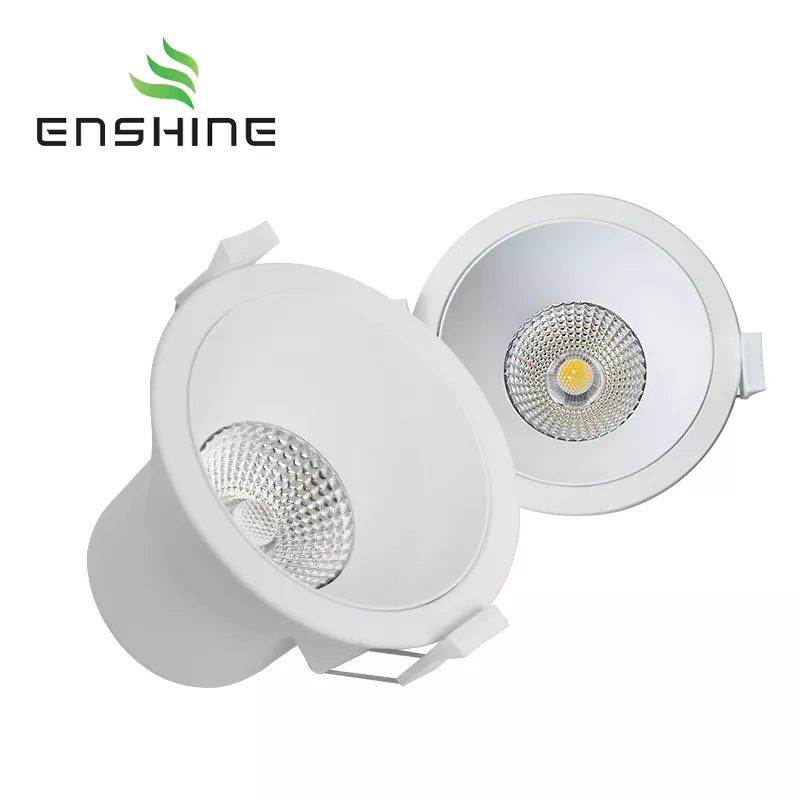
In the trade, “canless recessed lighting” refers to fixtures that do not need a separate metal housing can in the ceiling. The driver electronics are built into the lamp body, an approach often described as driver-on-board (DOB). The fixture connects directly to the supply wiring and is secured at the ceiling cutout, so the ceiling cavity does not need a dedicated driver box.
The DOB series in our range follows this design. The 3CCT DOB downlight YX-DLA-F is available in 5 W, 9 W and 12 W, with a cutout of Φ70 mm or Φ90 mm, a plastic body of Φ90–110 mm, AC90–265 V input, 90 lm/W, and a DIP switch for 3CCT selection. The slim 3CCT DOB series YX-DLA-E is offered in multiple wattage steps up to 28 W (confirm the exact wattage options for the version you order), with AC165–265 V input, 75–90 lm/W, and cutouts from 75 mm to 190 mm in a slim plastic body. Both integrate the driver into the lamp body, so no separate driver enclosure is mounted in the ceiling.
For buyers comparing “led can lights” with “canless recessed lighting,” the practical difference is not only the absence of a can. It is the reduced number of components per fixture and the reduced depth required above the ceiling.
Traditional recessed downlights explained: housing plus separate driver
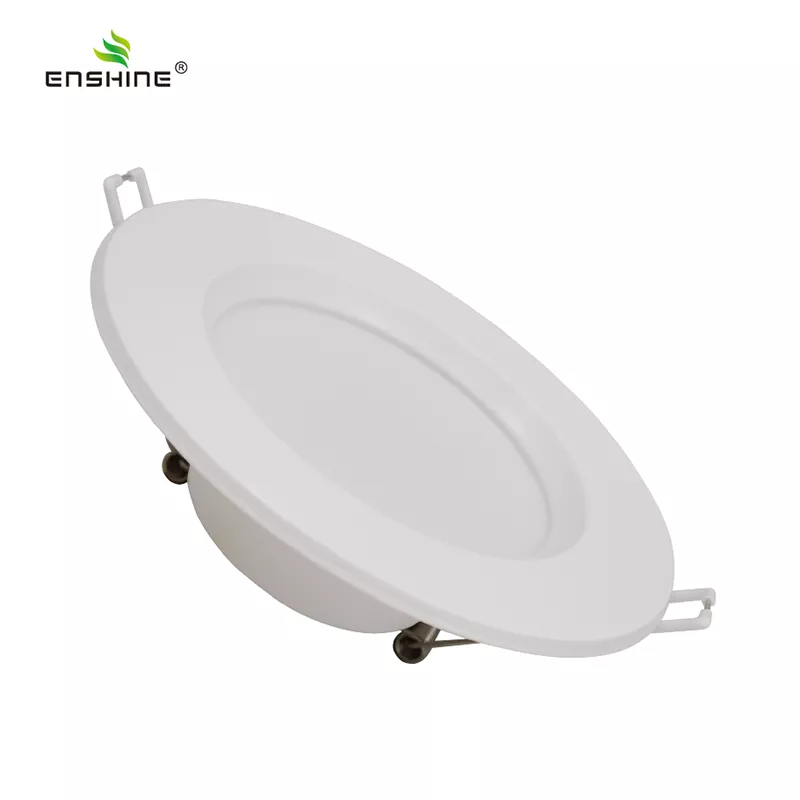
A traditional recessed downlight is built around a housing — a metal can or frame installed in the ceiling — with a separate driver that may sit inside the housing, in a junction box, or remotely. Wiring runs to the driver, and the lamp module is connected to the driver output. This architecture allows the driver to be replaced independently of the lamp, but it requires more components and, in many designs, more ceiling depth.
In our range, the YX-DLC recessed LED downlight illustrates the traditional approach. It is available in 8 W and 10 W versions with SMD2835 at 900 lm or COB at 1050 lm, uses die-cast aluminium and PC construction, fits a Φ70 mm or Φ90 mm cutout, is rated at 40,000 hours, and has a power factor above 0.9. The die-cast aluminium body gives the fixture a different thermal path from a slim plastic design.
For projects where the ceiling void is deep enough and service access to the driver is planned, the housing design remains a valid option. It also suits specifications that call for a metal body or a replaceable driver as a maintenance requirement.
Side-by-side comparison
| Consideration | Canless / driver-integrated (DOB) | Traditional recessed (housing + driver) |
|---|---|---|
| Driver location | Integrated into the lamp body (DOB) | Separate driver, mounted in housing, junction box or remotely |
| Ceiling depth | Shallow; slim body suits limited voids | Deeper cavity needed to clear the housing |
| Installation steps | Connect supply, secure at cutout; no driver box to mount | Mount housing, wire driver, connect lamp module |
| Cutout range (examples) | YX-DLA-F: Φ70 mm or Φ90 mm; YX-DLA-E: 75–190 mm | YX-DLC: Φ70 mm or Φ90 mm; YX-DLA-D: Φ70–90 mm or Φ95–120 mm |
| Housing material | Plastic body on the DOB series | Die-cast aluminium / PC (YX-DLC); iron housing (YX-DLA-D) |
| Dimming | Confirm the dimming method for the specific DOB model with the supplier before ordering | Driver-dependent; for example, the YX-DLS 10 W SMD downlight supports Triac dimming 5–100%; confirm the protocol with the supplier |
| Maintenance | Usually replace the complete fixture | Driver and lamp module can be serviced separately where accessible |
Installation form factor and wiring
The installation sequence is the clearest difference. A driver-integrated slim downlight is typically wired directly to the branch circuit and held by spring clips or a mounting frame at the cutout. There is no separate driver enclosure to fix to a joist or through a junction box, which reduces the number of connections inside the ceiling.
A traditional housing fixture requires the housing to be positioned and secured first, then the driver to be wired and connected to the lamp. In new construction, this has little effect on speed if the ceiling is open. In retrofit work, where access is limited to the cutout, the extra components become a practical constraint.
Both types are available in multiple cutout sizes. On the DOB side, the YX-DLA-F covers Φ70 mm and Φ90 mm, and the YX-DLA-E runs from 75 mm to 190 mm. On the traditional side, the YX-DLA-D iron-shell downlight covers Φ70–90 mm and Φ95–120 mm, and the YX-DLC covers Φ70 mm and Φ90 mm. Matching the cutout to the existing or planned ceiling opening is more important than the fixture type itself.
For adjustable aim, the YX-DLA-C 360° rotatable gimbal downlight offers 5–12 W, 3CCT at 3000/4000/6500 K, 360° horizontal rotation in a 3.5-inch plastic body. It is an example of how the slim form factor can also serve directional lighting.
Cost: components, labor and project stage
Cost comparisons should separate material cost from installation labor. A driver-integrated downlight contains fewer separate parts — no housing can and no separate driver enclosure — which reduces the bill of materials for the fixture itself. It also reduces the wiring and mounting steps per point, so the labor component of installation is lower when the number of fixtures is large.
A housing-plus-driver fixture carries more components and more installation steps, but it offers serviceability that may be required by a specification. Material choice also affects cost: die-cast aluminium and iron housings differ from plastic bodies in weight, finish and thermal design. Price levels vary by supplier and order volume, so the correct comparison is a landed cost per installed point, not a unit price alone.
Project stage matters. In new construction, the ceiling is open and both types can be installed efficiently. In retrofit, the slim driver-integrated format usually means less work at each cutout, especially where the existing void is shallow or access is limited.
Maintenance and durability
Maintenance strategy is often decided at specification stage. A driver-integrated downlight is normally replaced as a complete fixture when it fails; there is no separate driver to swap. A housing-based fixture can have its driver or lamp module replaced independently if the components are accessible and the replacement parts are available.
Housing materials influence the long-term service plan. The YX-DLC uses die-cast aluminium and PC and is rated at 40,000 hours. The YX-DLA-D uses an iron housing and is also rated at 40,000 hours; it is available with SMD at 640 lm or COB at 800 lm. For the DOB series, the product details provided do not state a lifetime figure, so buyers should request the applicable lifetime data for the specific model before writing it into a specification.
Where dimming is part of the project, confirm the dimming method per model. The YX-DLS 10 W SMD downlight supports Triac dimming from 5% to 100%, delivers 1100 lm, fits a Φ90 mm cutout, and has a 40,000-hour rating. Dimming compatibility should be checked against the selected driver and dimmer, whichever fixture type is chosen.
Which to choose: new construction vs retrofit
Choose a driver-integrated (canless-style) downlight when:
- Ceiling depth is shallow or the void is restricted.
- The project favors fewer components and faster installation per point.
- Replacing a complete fixture at end of life is acceptable.
- Cutout sizes match the slim series, for example Φ70 mm or Φ90 mm on the YX-DLA-F.
Choose a traditional housing-plus-driver downlight when:
- The specification calls for a metal or iron housing.
- Component-level service access is required.
- Ceiling depth accommodates the housing.
- A specific lumen output and body construction are defined, such as the YX-DLC or YX-DLA-D.
FAQ
Is canless recessed lighting the same as LED can lights?
No. “Canless” means the fixture does not need a separate housing can; the driver is integrated into the lamp body. “LED can lights” usually refers to traditional recessed fixtures installed in a housing can with a separate driver or lamp module.
Can a slim DOB downlight be dimmed?
Dimming depends on the individual model and driver. Some models in the range support Triac dimming, such as the YX-DLS 10 W SMD downlight with 5–100% dimming. Confirm the dimming method for the specific DOB model before ordering.
What cutout size should I check for retrofit?
Measure the existing ceiling opening first. The YX-DLA-F fits Φ70 mm or Φ90 mm, the YX-DLA-E covers 75–190 mm, and the YX-DLC fits Φ70 mm or Φ90 mm. Matching the cutout avoids patching the ceiling during retrofit.
Next step
Before ordering, confirm four points with the supplier: the exact wattage options of the DOB model you need, the driver arrangement of each model, the dimming method, and the cutout size that matches your ceiling opening. Our team can check these points against the downlight models referenced above and send the relevant specifications with your enquiry.