SEO
LED Flood Light Manufacturers: IP Ratings, Driver Choices and OEM Capability
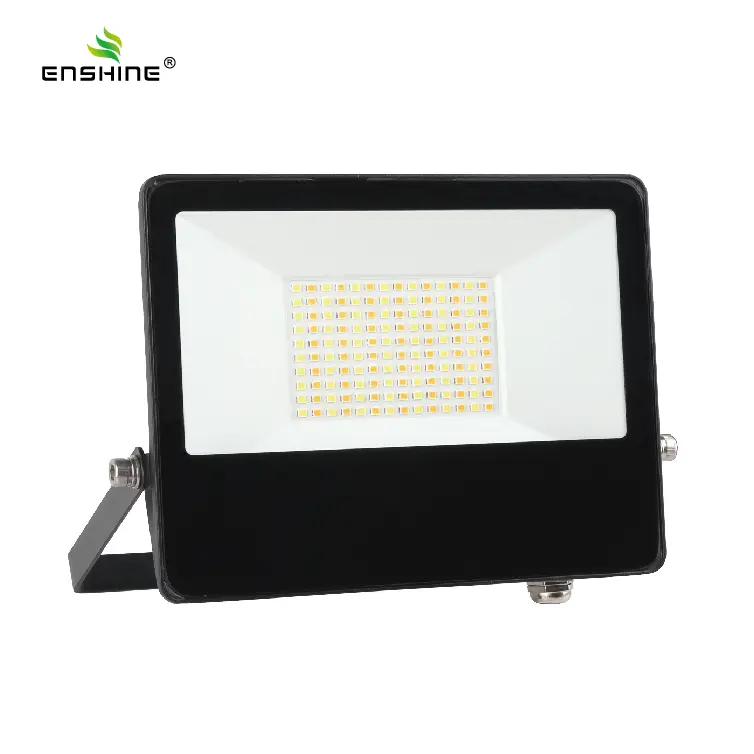
A comparison of three LED flood light architectures — DOB integrated driver, 3CCT PIR sensor, and high-power IP66 — and what each implies for IP verification, testing equipment, certification scope and OEM customization.
Supplier Comparison Guide
When buyers compare LED flood light manufacturers, the differences that decide a program are rarely visible on a spec sheet headline. They sit in three places: how the driver is built, how the IP rating is actually verified, and how far the factory can carry an OEM brief. This article compares the three flood light architectures most commonly quoted by outdoor LED flood light suppliers — DOB integrated driver, 3CCT PIR sensor, and high-power IP66 — and explains what each one requires in manufacturing and testing.
What this article covers
- Three driver architectures and their respective manufacturing constraints
- How IP65 and IP66 claims are validated in-house, and why the test chamber matters
- Certification scope by product line and target market
- OEM/ODM customization boundaries
- A practical question list to send to a candidate factory
1. Three driver architectures, three different factories
A flood light is usually judged by its housing, but the driver determines assembly complexity and field behavior. The three product lines below share a housing tradition but demand quite different production and QC setups.
DOB integrated driver (YX-FL-01 series)
DOB — driver-on-board — places the driver components directly on the LED board, eliminating a separate driver box and its wiring. The IP65 DOB flood light line runs from 10W to 200W across seven wattage steps, at 100–110 lm/W and 6000–6500K, with power factor above 0.55, a rated 50,000-hour life, a 3-year warranty, and an adjustable multi-angle bracket.
The manufacturing implication is that thermal design moves to the board itself. Heat has to leave through the PCB and into the die-cast housing with no intermediate driver enclosure, so board copper layout, thermal interface material and housing fit all matter more than in a discrete-driver design. Testing shifts accordingly: an aging room run and EMI checks at board level are more informative than an incoming driver inspection.
Where this architecture suits a buyer: volume programs in the 10–200W range where simplicity of assembly and a compact BOM matter. It is less appropriate where the application needs a very high power factor or a separable driver for field replacement.
3CCT PIR sensor model
The 3CCT PIR sensor flood light adds two functions on top of the light engine: field-selectable color temperature (3CCT) and passive infrared motion detection, operating at 220–240VAC, IP65, with CE, ETL and RoHS listed on the product attributes and a 2-year warranty.
Adding a sensor and a color selector increases assembly steps and, more importantly, increases the number of points where moisture can enter or a solder joint can fail. A factory running this line needs a reliable test routine for the sensor — trigger distance, hold time and daylight threshold behavior — plus a check that the CCT switch does not introduce a flicker or color shift at any of its positions.
Where this architecture suits a buyer: residential perimeter, driveway, yard and light-commercial security lighting where motion response and color flexibility are the selling points. For open-area high-mast applications, the sensor adds cost without function.
High-power IP66 engineering model
The IP66 1000W flood light is a different class of build: 1000W in a die-cast aluminum housing, aimed at stadiums, ports, warehouses and other large outdoor sites. At this power level the factory faces thermal load, cable entry sealing and mechanical strength all at once — the enclosure has to dissipate far more heat, the gland and gasket have to hold under weather, and the mounting has to carry the weight and wind load of a large fixture.
Where this architecture suits a buyer: project work with defined photometric layouts and where the IP66 rating is a specification requirement rather than a marketing preference. It also demands more from the factory's IP verification equipment — see below.
2. How an IP rating is actually verified in a factory
IP65 and IP66 are not declarations a factory can make from a drawing. Both require physical test equipment and a documented procedure. Enshine operates its own IP waterproof and dust test chamber, plus surge and EMI test equipment, salt spray testing and a high-temperature aging room — the set of capabilities needed to run IP verification, electrical stress checks, corrosion resistance checks and burn-in in sequence rather than sending samples out.
What separates a real IP program from a nominal one:
- A chamber, not a hose. IP6X dust ingress and IPX5/IPX6 water jet tests each need controlled conditions; a garden hose test does not produce a comparable result.
- Full assembly tested. The housing, gland, gasket and any sensor port must be tested as delivered, in the mounting orientation the product will be used in.
- Repeatability. The point of owning the chamber is that the same test can be re-run on the next production lot, not just on the first sample.
- Documented records. Buyers should be able to ask for the test record for the model they are ordering, and see what was tested and under what setup.
A die-cast line and an in-house injection molding line matter here indirectly: when the housing and the gasket are made on the same site as the assembly, dimensional drift between batches is easier to catch before it becomes an ingress failure.
3. Certification scope and target market
Certificates belong to specific models, not to a brand in general, and this is where many comparisons go wrong. The 3CCT sensor model lists CE, ETL and RoHS on its product attributes; that does not extend the same scope to the DOB or IP66 lines. Buyers entering North America should ask for the ETL listing that names the exact model; buyers entering the EU should ask for the CE documentation tied to the model and its voltage range.
Enshine holds ISO 9001 certification, which speaks to the quality management system. It is not a product certificate and should not be read as one.
A buyer's practical move is to treat the certificate set as a checklist per model and per destination: model number on the certificate, applicable standard, issuing body, and whether the scope covers the voltage and plug configuration being ordered.
4. What OEM/ODM can and cannot move
OEM/ODM support across the flood light range typically covers the parts a factory controls: housing and lens tooling (with its own die-cast and injection lines), branding and labeling, packaging, cable and connector configuration, bracket type, and color temperature or wattage selection within the existing platform. On the 3CCT model, sensor parameters such as hold time and sensitivity are natural customization points; on the DOB line, the wattage step and beam angle bracket are.
What tends to stay fixed is anything tied to the certified or tested configuration — the driver architecture itself, the IP construction, and the electrical platform behind a listing. A buyer asking for a new driver topology inside a certified housing should expect a re-test and a new certification cycle, and should price that into the program rather than assume it is a labeling change.
A useful way to state an OEM brief is to separate requirements from variations: fix the mounting-hole pattern, the IP class and the certification scope; list material, finish, branding and packaging as variations for the factory to propose. That keeps the comparison between candidate manufacturers on the same footing.
5. Question list for a candidate factory
| Area | Question to ask | Why it matters |
|---|---|---|
| IP verification | Do you have an in-house IP test chamber, and can I see the test record for the model I am ordering? | Distinguishes a verified rating from a nominal one |
| Driver architecture | For this model, is the driver integrated on board or separate? How is thermal performance checked at board level? | Determines field serviceability and BOM structure |
| High-power builds | For a 1000W IP66 model, what is the gland and gasket construction, and how is it tested? | Sealing is the weak point at high power |
| Sensor models | How is the PIR trigger tested, and at which ambient temperature? | Sensor behavior varies with conditions |
| Certification | Which standard, issuing body and model number appear on the certificate? | Certificates have narrow scope |
| Reliability testing | Is there a high-temperature aging room, salt spray and surge test capability in-house? | Indicates whether stress testing is routine |
| OEM boundaries | Which changes require re-certification, and who carries that cost? | Prevents surprises late in the program |
Answers to these questions are specific to the model and destination in question; a positive answer on one line does not carry over to another.
Closing note
Comparing LED flood light manufacturers works best when the comparison is anchored to the architecture the project actually needs. A DOB line, a 3CCT sensor line and a 1000W IP66 engineering model each ask different things of the factory's tooling, thermal design, IP verification and certification scope. Matching the question list to the product line, and asking for the record that supports each claim, is the part of the comparison that can be checked rather than taken on trust.
Looking for a Reliable LED Lighting Partner?
Tell us about your project or product requirements and our team will get back to you with a tailored quotation and professional lighting advice.